what are you looking for?
Popular Searches
Core Conclusion:
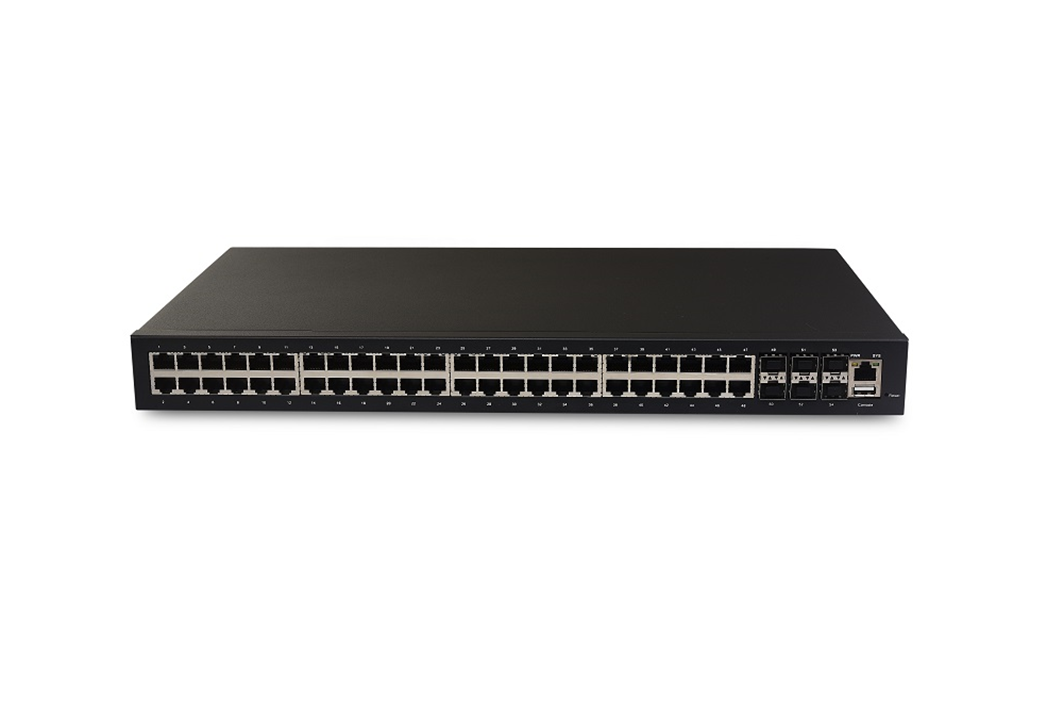
This product is a 10G Layer 3 Managed Fiber Ethernet Switch with high port density, featuring 48 electrical ports + 6 optical ports, high switching capacity, and comprehensive routing & security functions. It is suitable for enterprise, campus, and ISP network scenarios.
Featured Highlights:
1. 10G Managed Switch.
2. Support 6×SFP+ 48×GbE.
3. Support total PoE power:850W.
4. Managed Switch support VLAN.
5. Support Surge Protection Level:6KV
6. Support POE power supply.
- Model: EQ-SW6048MGH
- Port Configuration: 48 10/100/1000Base-T(X) RJ45 Ports + 6 1G/10G SFP+ Slots
- Core Attributes: Layer 3 Managed, Stacking-Supported, High Port Density, Multi-Scenario Adaptable
- Comprehensive Layer 3 Routing: Supports Static Routing, RIP, OSPF, VRRP, etc., to meet the needs of complex network architectures.
- Stacking for Simplified Management: Up to 8 devices can be stacked, enabling configuration and monitoring via a single IP address.
- Flexible Management Methods: Supports WEB/SSH/Telnet/SNMP/CLI, with Micro-USB Console compatible with laptops.
- Comprehensive Security Protection: Supports ACL, IP-MAC-Port Binding, DoS Defense, 802.1x Authentication, and other multi-layer protections.
- Switching Capacity: 360Gbps
- Packet Forwarding Rate: 190.5Mpps
- Power Supply Specification: AC 100-240V (50/60Hz) or DC 37-75V
- Maximum Power Consumption: 50W (220V/50Hz)
- Dimensions: 445×248×45mm (W×D×H)
- Operating Temperature: 0°C~50°C
1. Layer 2 Features
- Supports STP/RSTP/MSTP Spanning Tree Protocols to eliminate loops and realize link backup.
- 4K VLAN Groups, supporting QinQ and Voice VLAN to meet multi-service isolation needs.
- Link Aggregation (LACP): Up to 64 groups (8 ports per group) to improve link bandwidth and reliability.
2. Layer 3 Features
- Supports IPv4/IPv6 Dual Stack, with full coverage of dynamic routing protocols.
- Supports PIM-SM/DM multicast routing, suitable for high-definition video monitoring and conference scenarios.
3. QoS and Optimization
- Supports 802.1P/DSCP priority and 8 queue scheduling to ensure bandwidth for critical services.
- Port Bandwidth Rate Limiting and Storm Suppression to prevent network congestion.
4. Management and Maintenance
- Supports Configuration Import/Export and Dual Firmware Backup to ensure system stability.
- Hardware status monitoring (CPU temperature, port indicators) for real-time grasp of device status.

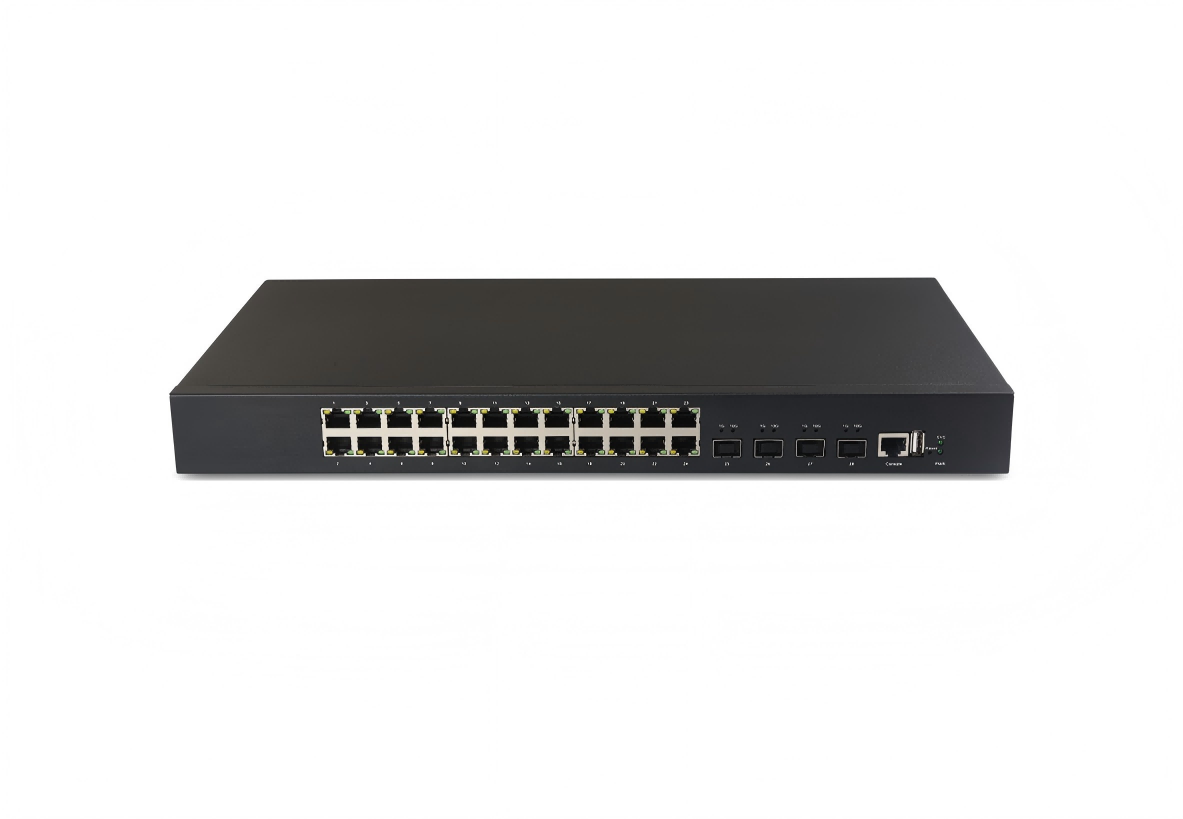
Overview: EQ-SW4024MGH Brochure Core Content List Core Conclusion: This product is a 10G Managed Fiber Ethernet Switch supporting Layer 3 routing. It integrates multi-port access, flexible stacking, and comprehensive management functions, suitable for small and medium-sized enterprises (SMEs) as well as monitoring/conferencing scenarios. Featured Highlights: 1. 10G Managed Switch. 2. Support 4×SFP+ + 24×GbE. 3. Support total PoE power:450W. 4. Managed Switch support VLAN. 5. Support Surge Protection Level:6KV 6. Support POE power supply.
Learn More
Core Conclusion: This product is a 10G Layer 3 Managed Fiber Ethernet Switch with high port density, featuring 48 electrical ports + 6 optical ports, high switching capacity, and comprehensive routing & security functions. It is suitable for enterprise, campus, and ISP network scenarios. Featured Highlights: 1. 10G Managed Switch. 2. Support 6×SFP+ 48×GbE. 3. Support total PoE power:850W. 4. Managed Switch support VLAN. 5. Support Surge Protection Level:6KV 6. Support POE power supply.
Learn More
 Mon ~ Fri: 9:00 ~ 19:00
 1402, Jingting Building, Guangming District, Shenzhen City, Guangdong Province, China
 zchen@equiinet.cn